Presentation of the Monograph A Fragment of East Asia
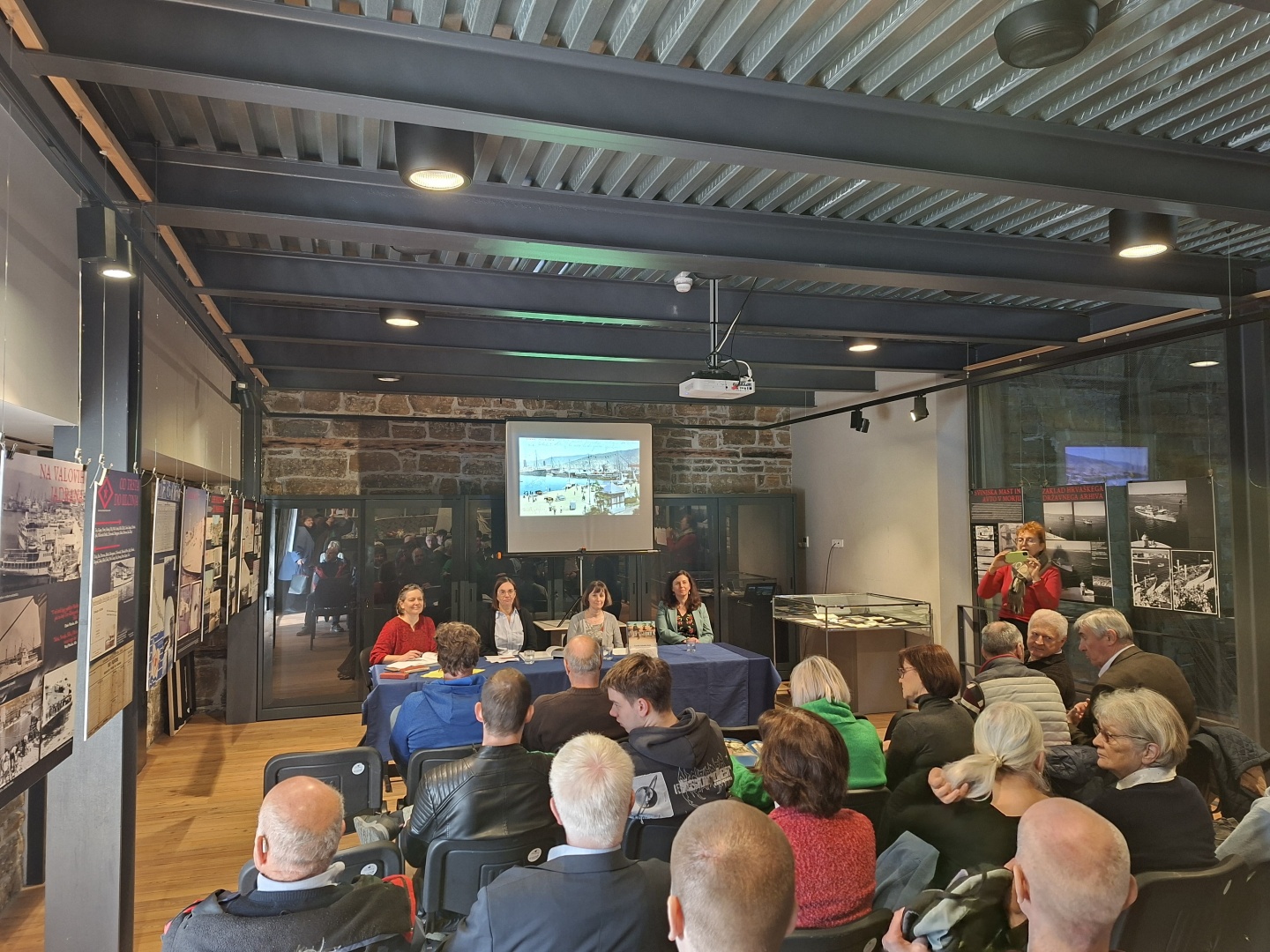
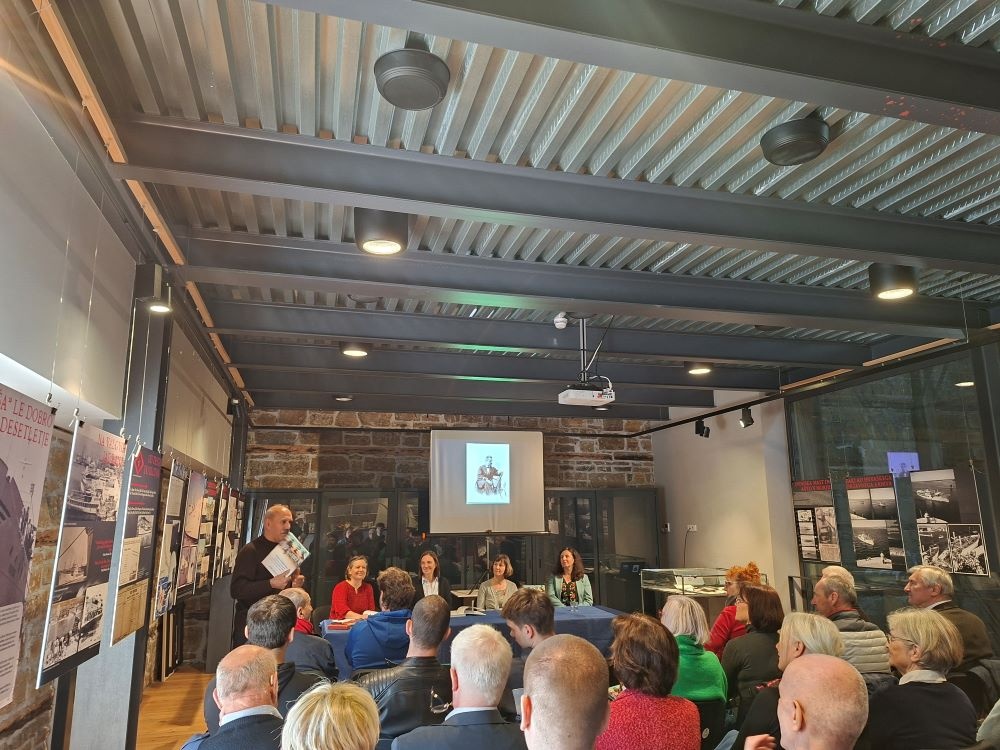
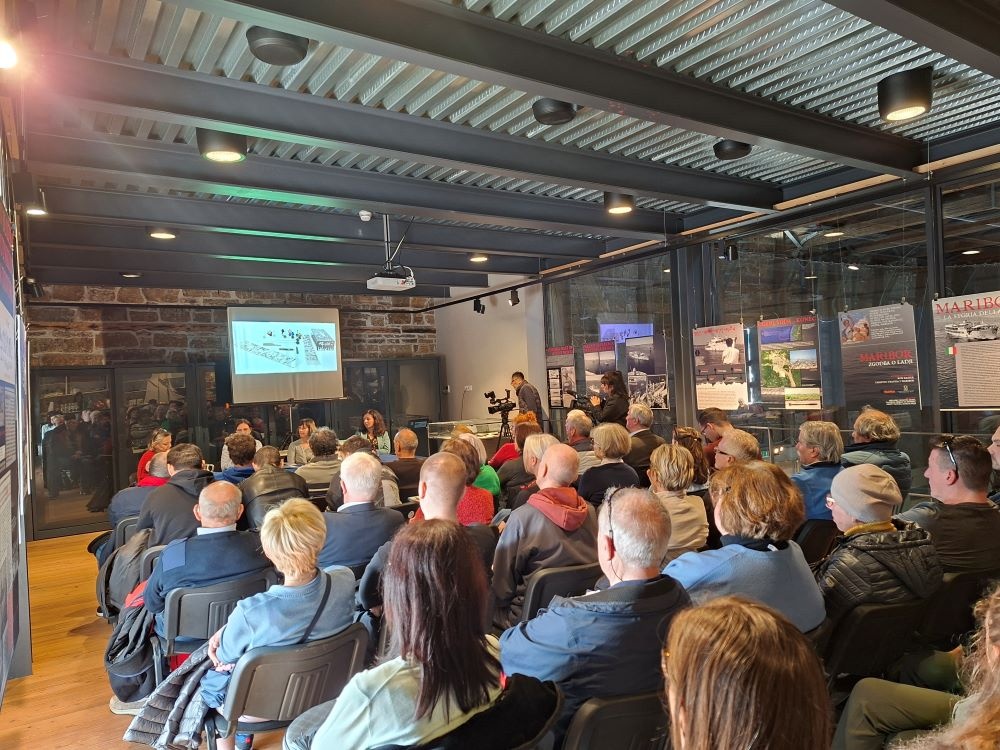
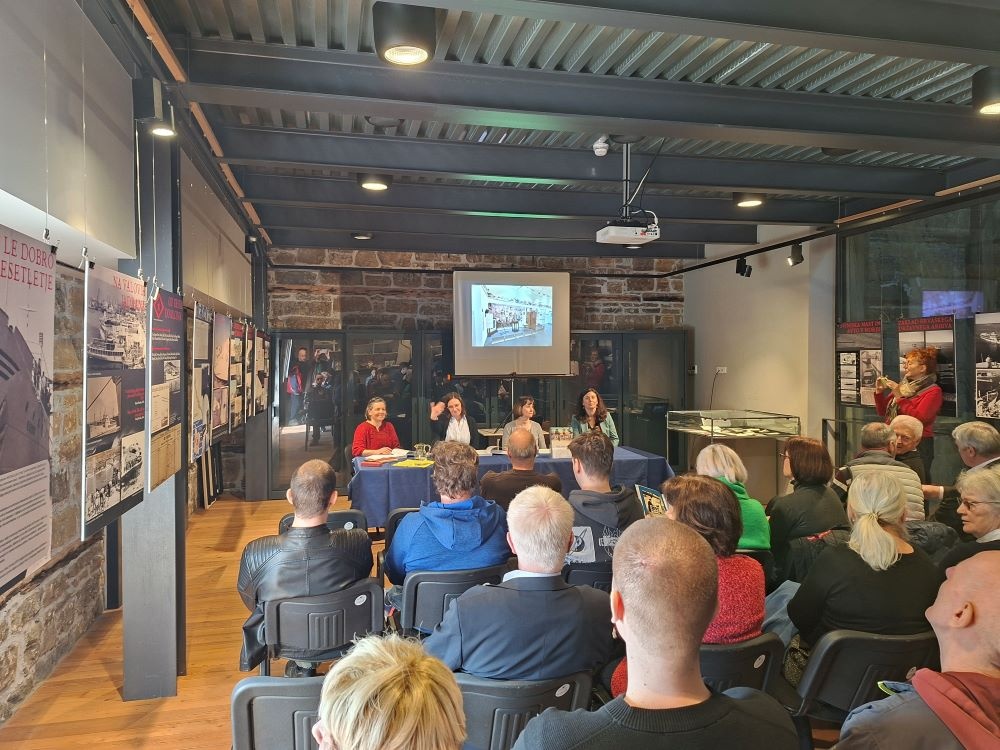
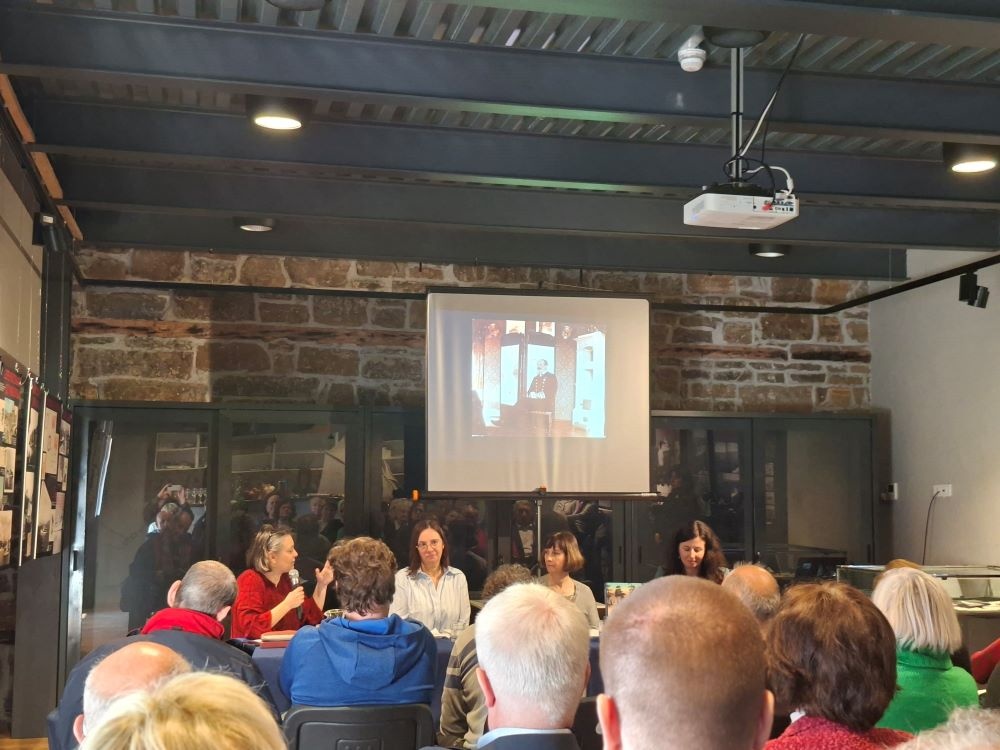
On Friday, 27 February 2026, the scientific monograph A Fragment of East Asia: souvenirs and decorative items in the legacies of mariners in Slovenia (2025) was presented to a packed audience at the exhibition hall of the Maritime Museum’ Monfort Gallery in Portorož. The monograph was made as part of the project Orphaned Objects, a study of East Asian items outside organized collecting practices in Slovenia (J6-3133; 2021–2025), funded by the Public Agency for Research and Innovation of the Republic of Slovenia (ARIS).
The Maritime Museum Piran also took part in the project by financially supporting the publication of the book.
At the beginning, the audience was addressed by Dr Flavio Bonin, the Maritime Museum’s historian, who emphasized the exceptional research and cultural value of the monograph, which throws light on previously less known chapter of Slovenian maritime heritage. There followed in-depth presentations by the editors and authors of the contributions: Dr Nataša Vampelj Suhadolnik and Dr Maja Veselič from the Department of Asian Studies, Faculty of Arts, University of Ljubljana, Bogdana Marinac from the Maritime Museum Piran, and author Dr Helena Motoh from the Koper Science and Research Centre. The authors Tina Berdajs, Klara Hrvatin, Katherine Anne Paul, Nataša Visočnik Gerželj and Chikako Shigemori Bučar also had their articles presented, as they were unfortunately not in position to attend the event itself.
The authoresses underlined that they wished with their monographs to deepen and upgrade the subject, which had been presented as early as in 2023 at the exhibition of the author Bogdana Marinac with the title A Fragment of Far East: items from East Asia in mariners’ collections in the Maritime Museum Piran.
The booklet comprehensively presents the items brought by Slovenian seafarers, members of diverse military and merchant navies, back from their voyages in the period from the mid-19th century to the 1960s. The authors narrated about their origin, significance and role in the East Asian cultural environment, and about their life after their transfer to new environments. They pointed out that the life paths of the items intertwined with the stories of the seafarers and their voyages, and that the items disclose their culture of collecting and shopping. The authors emphasized that they also dedicated themselves in depth to the research process itself: from recording and documenting items, fieldwork, archival research and comparative analyses to establishing connections between items, their owners and broader historical circumstances. They highlighted individual objects that stand out due to their rarity, aesthetic value or personal stories linked to their owners. They also drew attention to the important role of associates and individuals who lent, sold or provided valuable information on objects, thus contributing to a more comprehensive understanding of the collections.
The authors underlined that they were also committed to an in-depth research process itself: from recording and documenting objects, fieldwork, archival research and comparative analyses to establish connections between objects, their owners and broader historical circumstances. They highlighted individual objects that stand out due to their rarity, aesthetic value or personal stories associated with their owners. They also drew attention to the important role of associates and individuals who lent, sold or provided valuable information on items, thus contributing to a more comprehensive understanding of the collections. Separately, they presented larger and more rounded collections, including the collection by Ivan Skušek Jr., which is exceptional in its size and diversity between collections of mariners and also between collections of East Asian items in Central and Eastern Europe. The collection is a precious insight into the collecting ambitions of the owner, who wished to establish a museum of Chinese culture in Slovenia. Furthermore, they called attention to the reasons why owners kept their items – from memorial and emotional value to symbolic meaning, prestige or the wish to represent their own travels and cosmopolitanism. Finally, they described the connections between seafarers and their mutual contacts, which influenced the selection of objects and co-created a specific collecting culture in the maritime environment.
The monograph also presents various religious items, including a statue of the Laughing Buddha, wooden figurines of Shouxing deities, etc., pieces of clothing and weapons, items, tea sets, albums, postcards and photos, furniture and all kinds of other useful items. For all those who were not in position to attend the presentation, the publication is available online at https://ebooks.unilj.si/ZalozbaUL/catalog/book/806 and in a book edition. You are warmly invited to read it.
The monograph was published by the Scientific Publishing House of the Faculty of Arts, University of Ljubljana, in collaboration and with the financial support of the Maritime Museum Piran.
Prepared by: Snježana Karinja and Bogdana Marinac
Translation: Henrik Ciglič
Photos: Snježana Karinja