This Happy Day of Culture with maritime and archaeological incentive at the Maritime Museum Piran
On this Happy Day of Culture, people had chance to visit, free of charge, the Maritime Museum with its units in the Tartini House in Piran and at Monfort, and were at the same time offered to take part at two interesting workshops: the kamishibai workshop "Victory by Two" at the Maritime Museum Piran and the "card weaving test" at Monfort in Portorož. Even though not many people attended the workshops, they gained a valuable, almost intimate experience there.
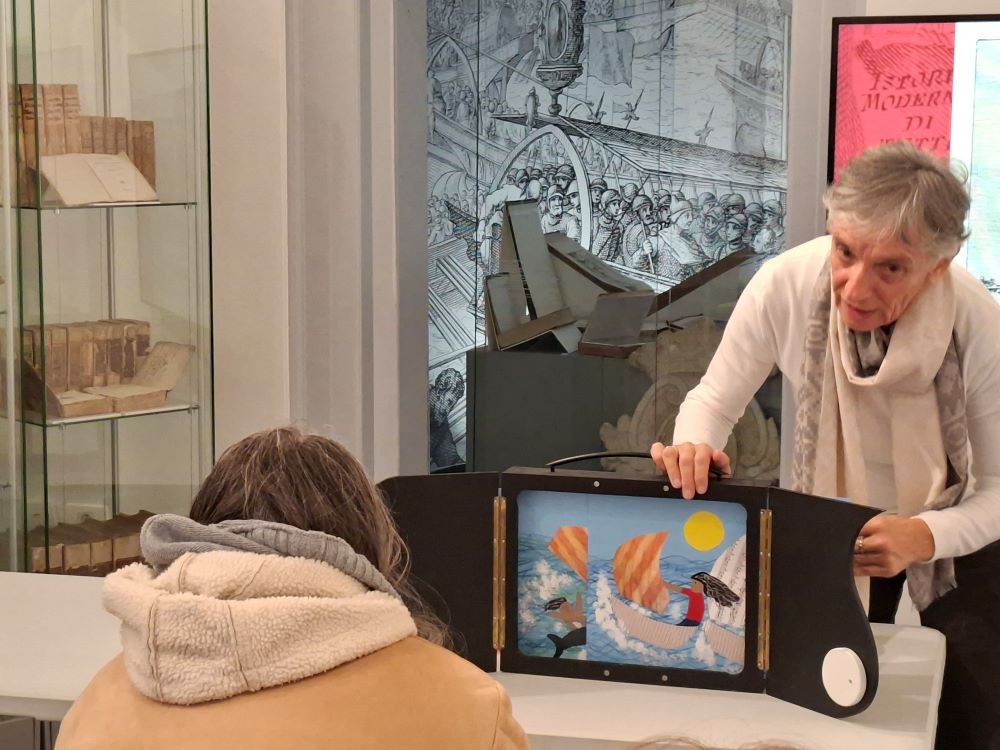
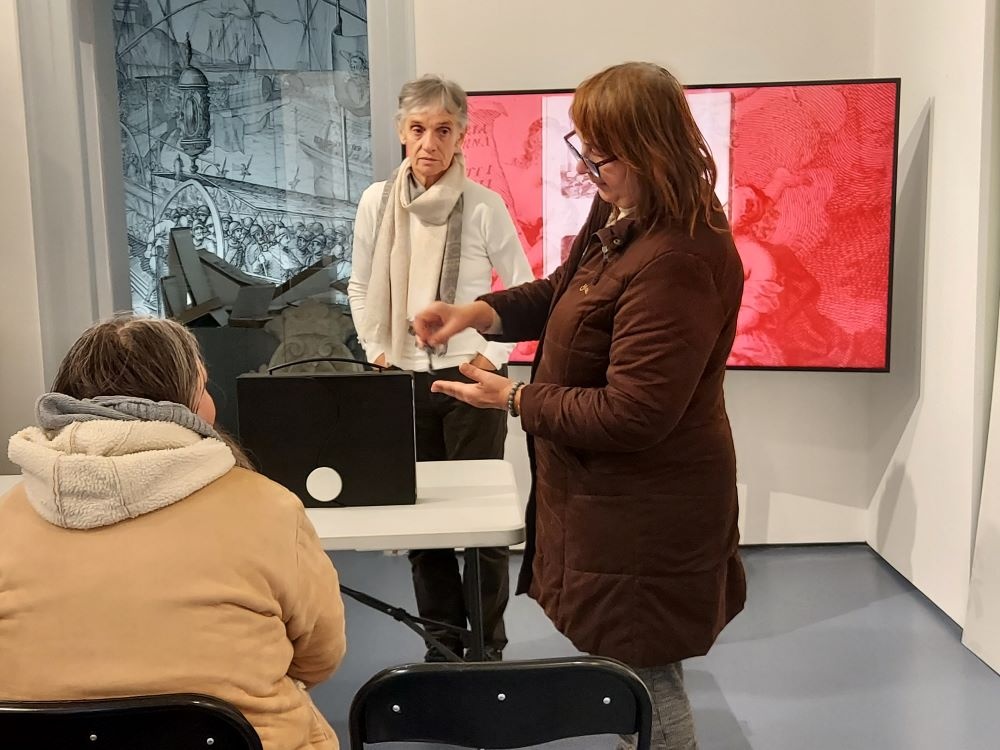
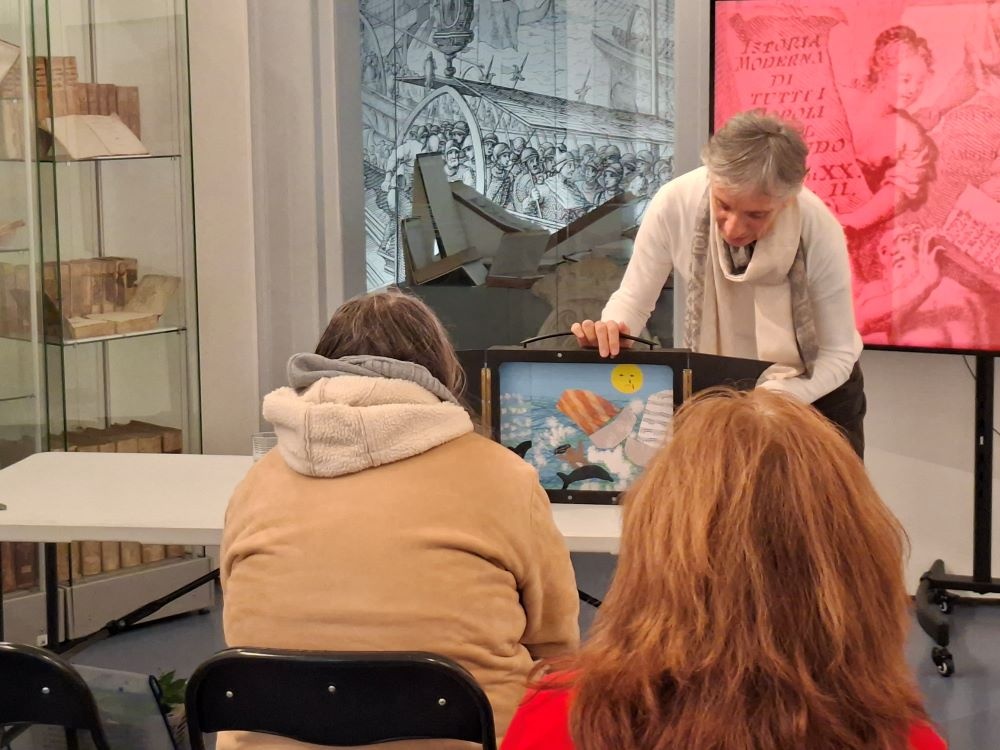
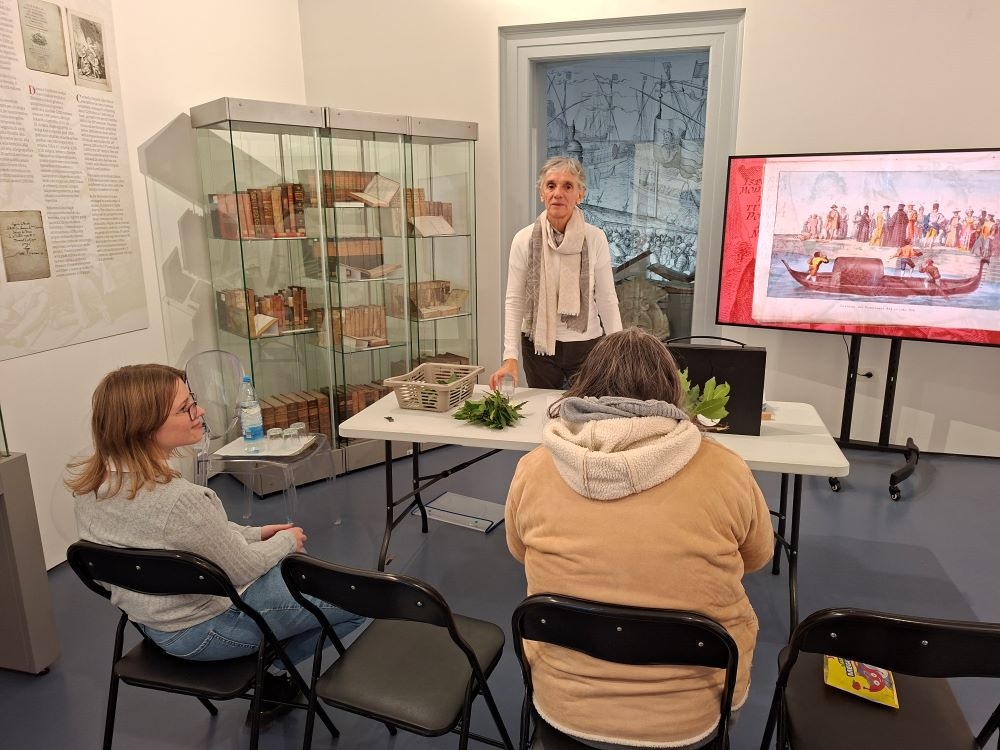
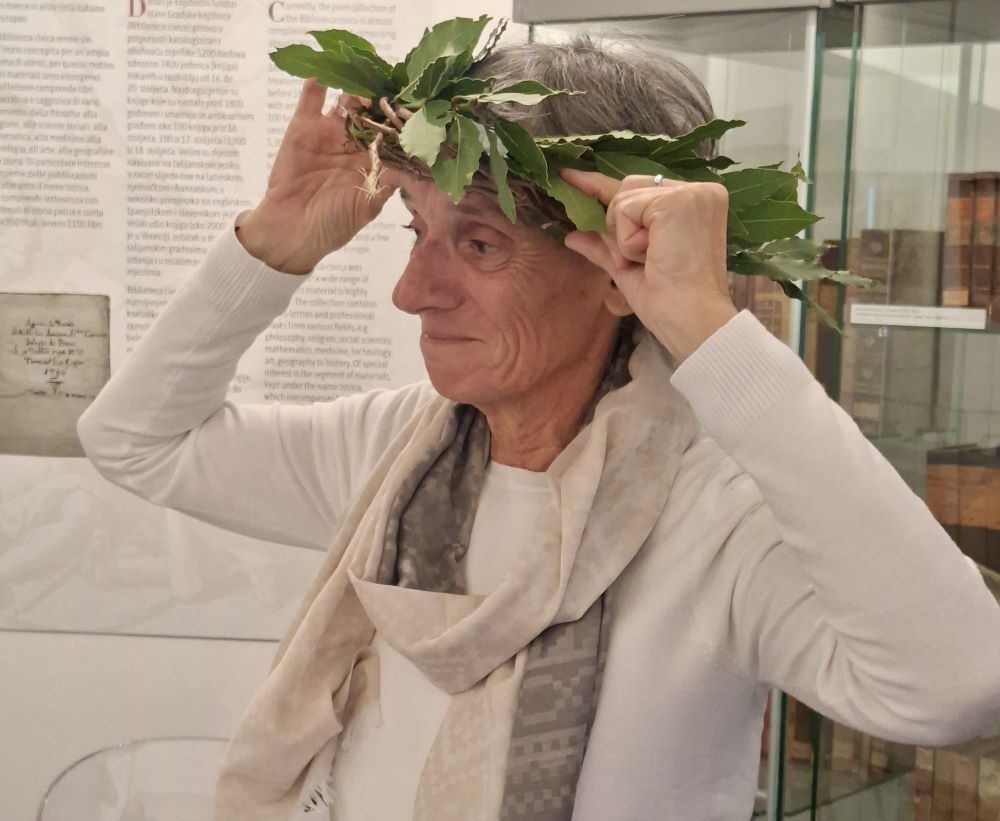
In the introductory part, the participants were addressed by the Maritime Museum’s curator Snježana Karinja, emphasising that the contemporary story Victory by Two, which they were about to hear, was created as an accompanying programme for the inter-museum exhibition Heritage and the Power of Myths. The event was performed already for the fifth time. She also presented to the audience various museum archaeological artefacts related to the story and interwoven with the myths about Nike and Victoria, the goddesses of victory. On a small kamishibai stage, characteristic of Japanese storytelling accompanied by pictures, Špela Pahor appeared. With her original, colourful illustrations and persuasive narrative, she revived the story of sailing and friendship, conceived and written by Snježana Karinja within the framework of the exhibition Heritage and the Power of Myths. The event brought closer to the visitors the charm of kamishibai and the power of storytelling through pictures.
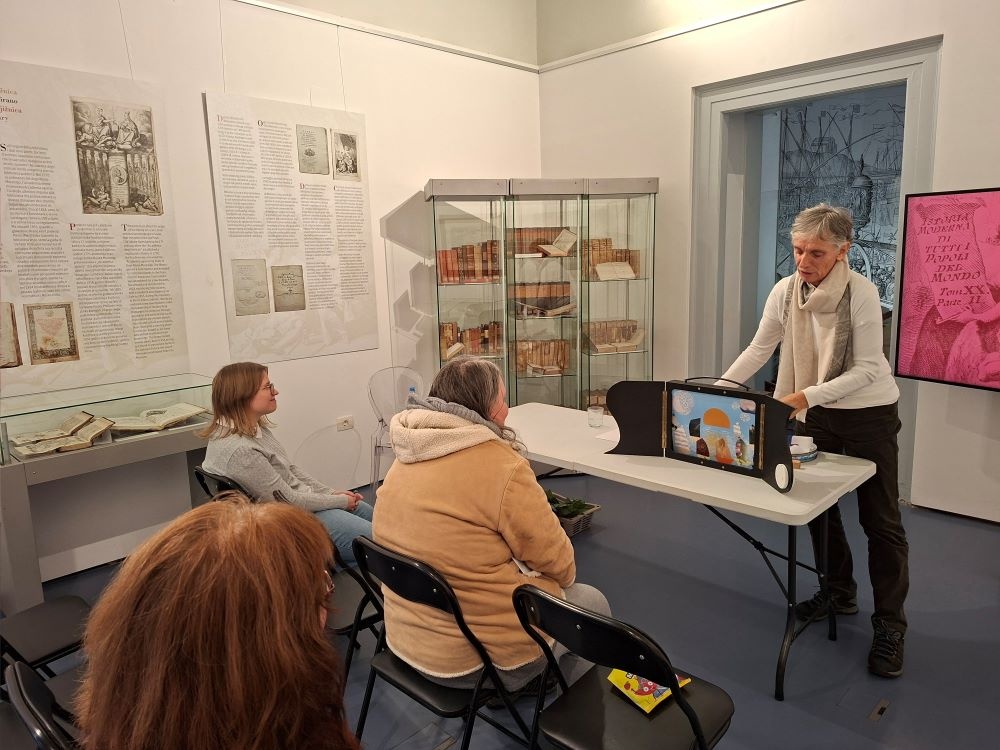
Špela Pahor also disclosed to the audience a little more about the origin and development of kamishibai. Kami denotes paper, and shibai denotes theatre. In the past, Buddhist monks interpreted religious teachings with the aid of pictures, similar as to how frescoes on church walls brought biblical stories closer to commoners. The current form of kamishibai was developed before World War II, when several thousand kamishibai performers worked in Tokyo. They came to the city’s streets or parks with their bicycles, with children eagerly waiting for them. Before embarking on telling their stories, they announced the start of the show by knocking wooden sticks against each other, but they also kept sweets in the saddle bags of their bicycles for young listeners. Kamishibai was so very popular that the Japanese later on called TV "electric kamishibai."
After World War II, this Japanese tradition spread all over the world. To Slovenia, it was brought about a decade ago by ethnomusicologist Igor Cvetko and playwright Jelena Sitar Cvetko, both already well-established puppeteers. Kamishibai swiftly attracted the attention of many enthusiasts in our country and developed into a true movement. Eventually, the Kamishibai Society of Slovenia was founded, with national and international festivals and a number of smaller events organised around the country.
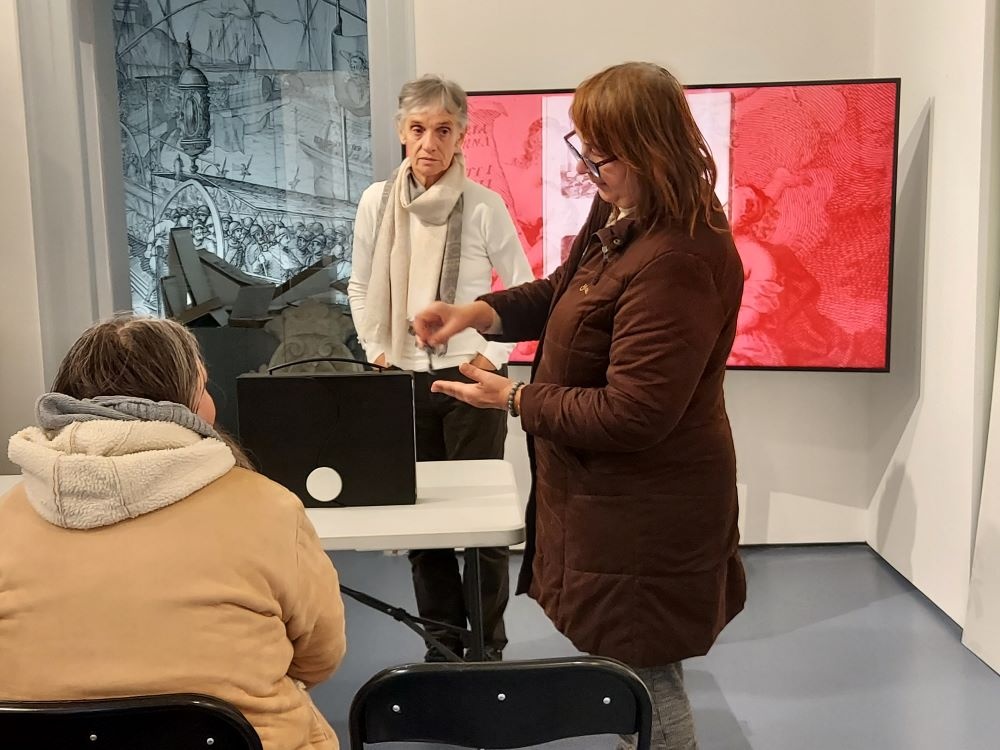
Špela Pahor’s first contact with kamishibai took place at the festival in Židovski trg in Piran, where she was so impressed by it that she asked to be allowed to perform the following year. A couple of years later, she received an award for her original approach to Slovenian folk tradition and the Golden Kamishibai at the festivals in Štanjel. For the narration of kamishibai, a small wooden stage is needed – a butai, together with a set of illustrations and a good story. Creators often opt for stories that address them personally: sad, tender, amusing or love stories. Most popular are stories from folk tradition, since they enable creative interpretation and adaptation to different audiences. Špela Pahor’s butai was made and painted by her neighbour, while all the necessary measurements and instruction she found on the web. For the first attempts, the butai can also be simply made from cardboard. In addition, paper, crayons, brushes and, of course, a story that enables the storyteller to bring it to life visually and narratively, are also required.
Authorial kamishibai, in which the narrator herself or himself illustrates the story and is often also its author, is already well-established in Slovenia. Still, kamishibai is not intended only for storytelling - it is used in the interpretation of songs and poems, in schools as a didactic tool within various subjects, in dealing with people with special needs, as well as in hospitals, where it helps children during their long-term therapy.
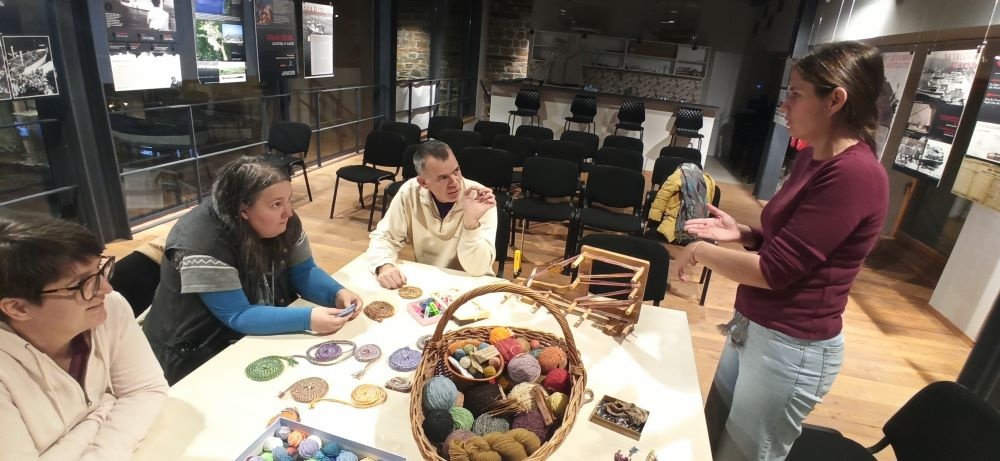
At the Monfort Exhibition Center, visitors were able to participate, in addition to viewing the permanent collections on shipbuilding, water sports and salt, as well as occasional exhibitions, in a card weaving test by Maruša Bizjak.
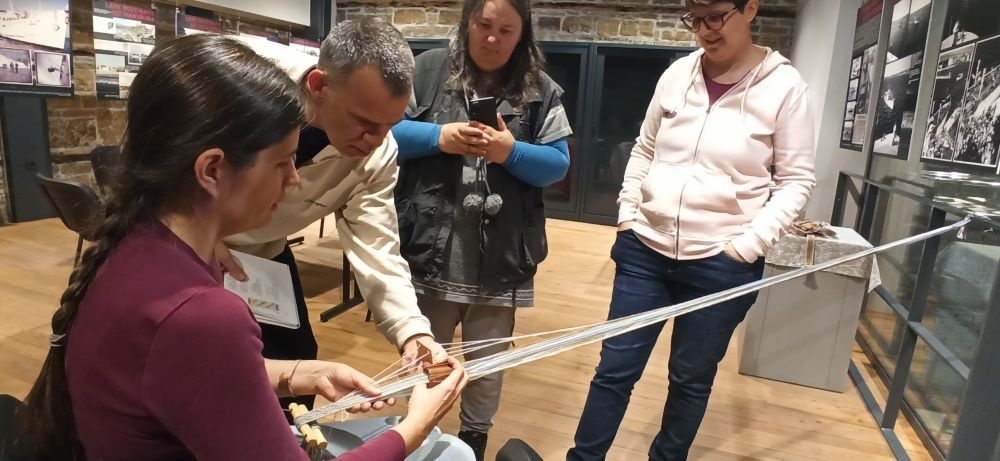
Initially, they learned some basics about the technique itself and its history. For this technique, two points are needed, between which threads and punched cards are stretched, with the help of which a pattern is created. This type of weaving dates back to the Bronze Age and has been used for centuries, right up to modern times, to weave strong decorative strips, which were used particularly as clothing borders or belts. The technique has been known throughout history in the entire Eurasia and North Africa, and is at the present time non-professionally spread all over the world.
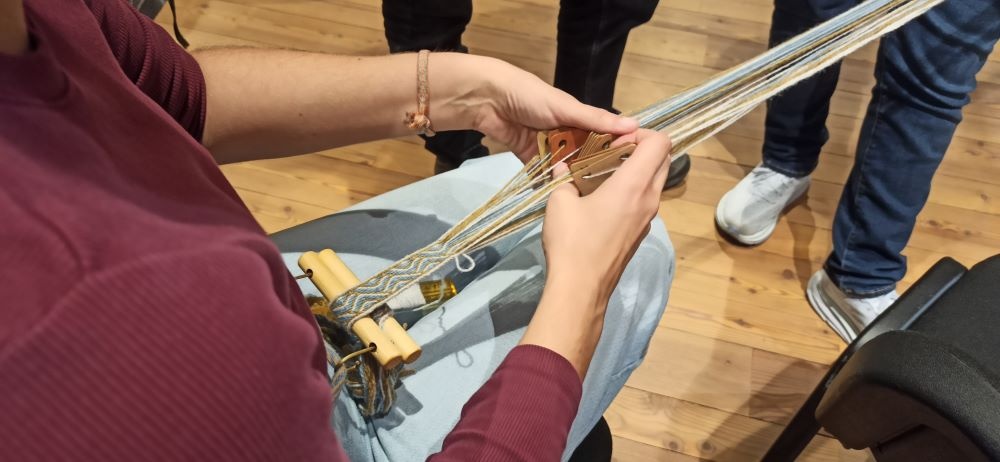
Visitors found out that among the oldest and most numerous finds of ribbons are those from the Bronze and Iron Ages, all from the salt mine in Hallstatt (Austria), which survived owing to the salt and which are still found these days during new archaeological excavations. Still closer to our area, products woven with cards were discovered at few Iron Age sites in northern Italy, and an interesting find from Norway (Oseberg) from the 9th century, where simple looms with as many as 52 cards and threads were discovered in the rich burial of two women on a ship. Among the not quite numerous weaving cards discovered during archaeological excavations, a bone one was also found in Koper. It is dated to the period between the 5th and 7th centuries and is currently on display in the Regional Museum Koper.
Following the introductory presentation, the visitors attended a demonstration of weaving a belt with an Iron Age geometric pattern of a seated meander, similar to waves and appearing, inter alia, on Histrian pottery. The pattern is most appropriate for weaving with the presented technique – almost as if it was created for it or with it. They were acquainted with the basic methods of creating patterns and also how fishing reels can be helpful in this type of weaving.
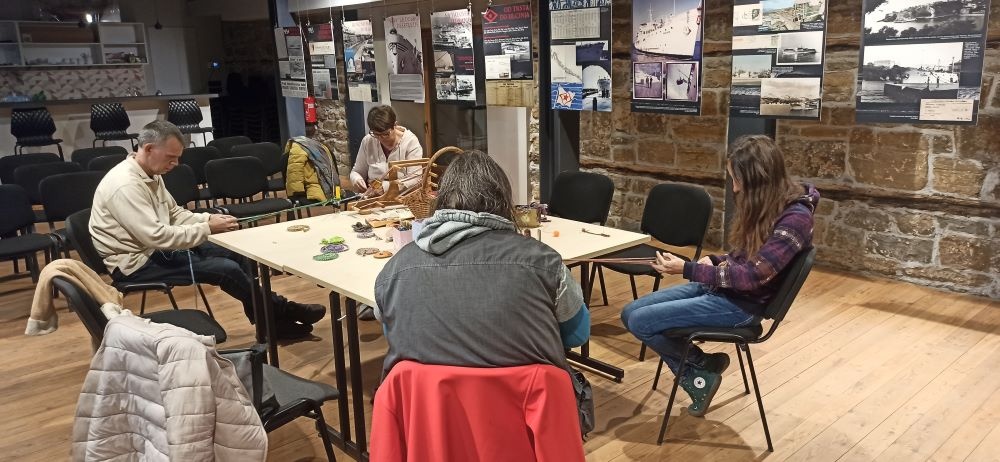
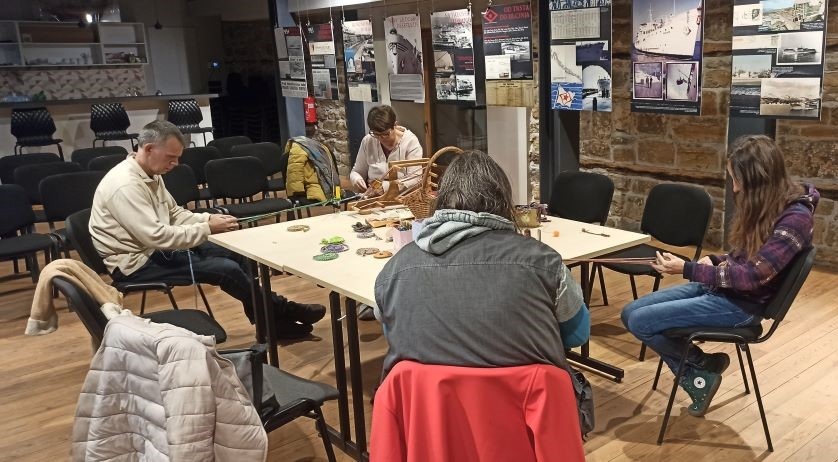
Eventually, the victors embarked on the weaving procedure themselves with ready-made kits with unique patterns that remained hidden until the first lines were made. They created bracelets or book indexes, some for their own use, others as gifts for their loved ones. Some displayed a great spirit of exploration, others a sense of planning, rhythm, detail, beauty and integrality. Each of them tackled it in their own way and at their own pace, but together we discovered the calming and at the same time stimulating weaving effects and the laws of the technique itself, and in the end came to some fascinating conclusions.
Photo gallery