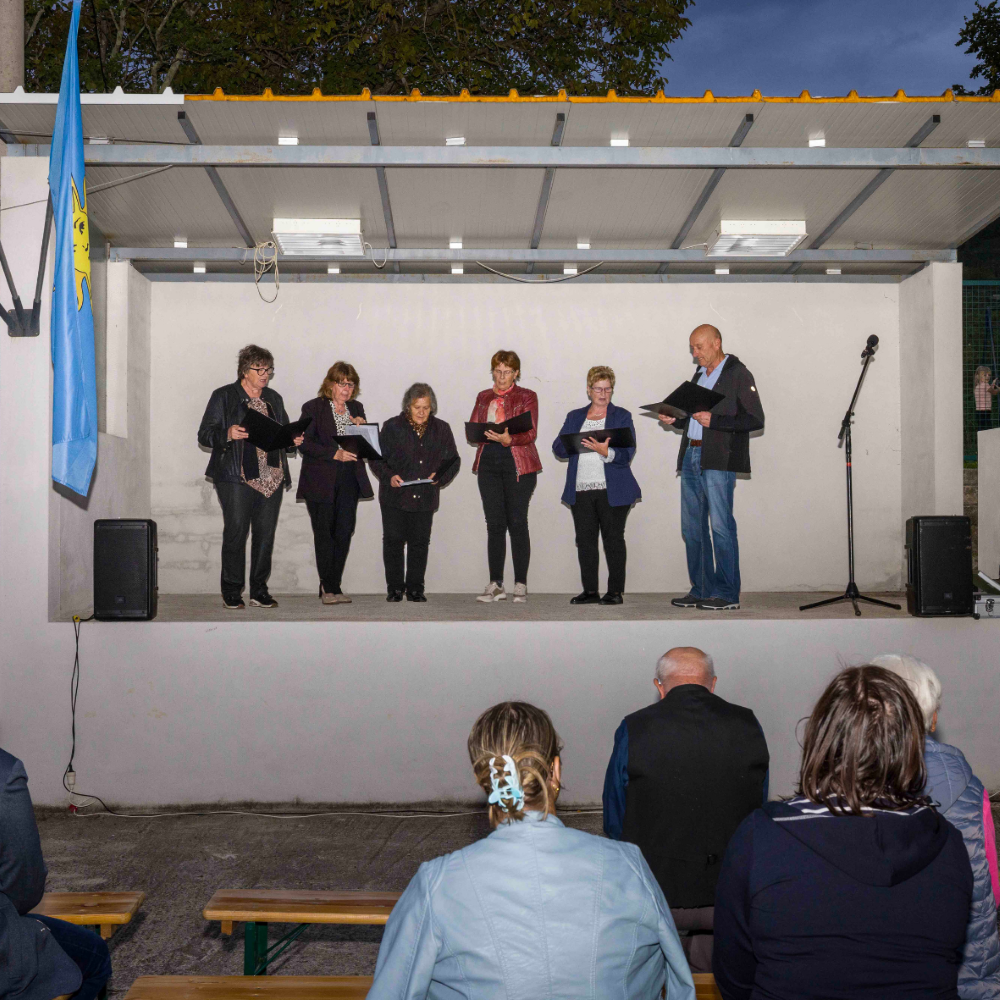
Presentation of Elica Boltin Tome's Book Predloka in the vestibule of the worlds
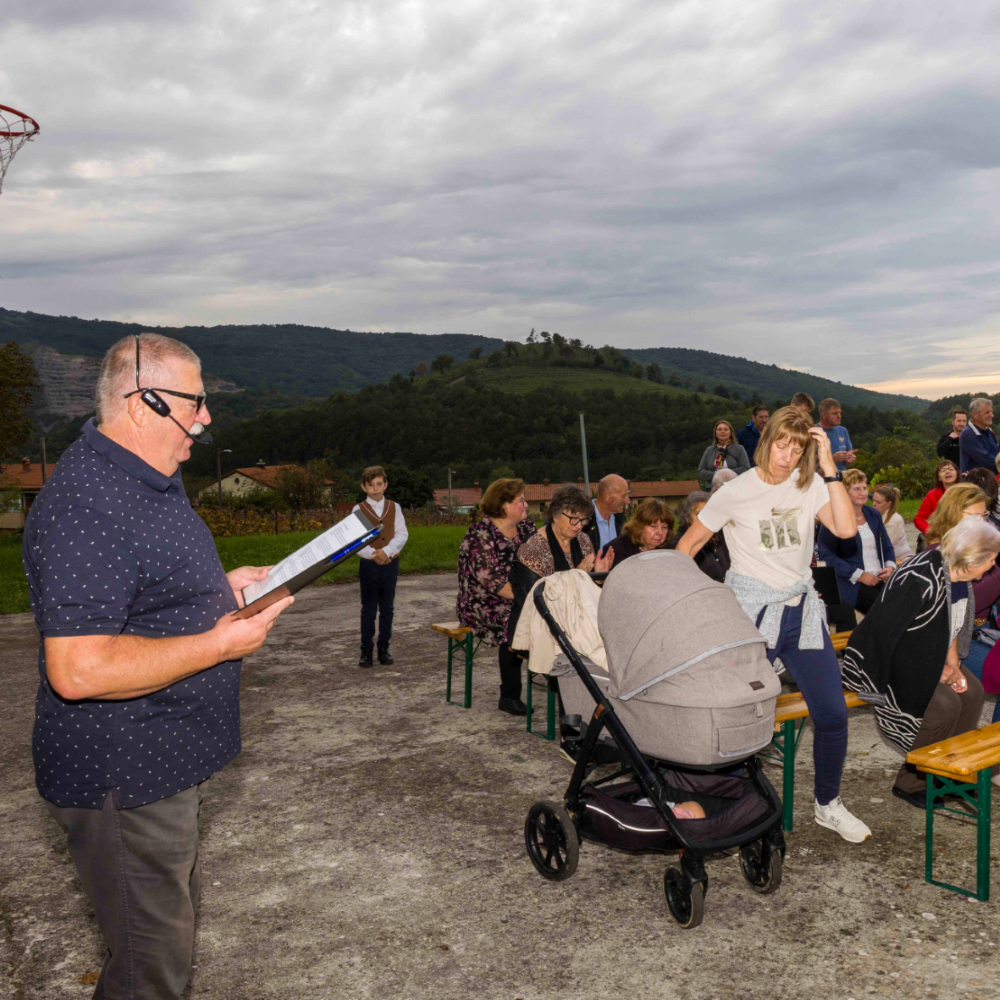
On Saturday, 10 October 2026, at 5 p.m., Dr Nadja Terčon presented the book Predloka: In the Vestibule of Worlds in the village square next to the parish house in Predloka, near Črni Kal.
The venue is located in the immediate vicinity of the Church of St John the Baptist and the site of the long-running archaeological excavations conducted by Elica Boltin Tome and the Sergej Mašera Maritime Museum in Piran.
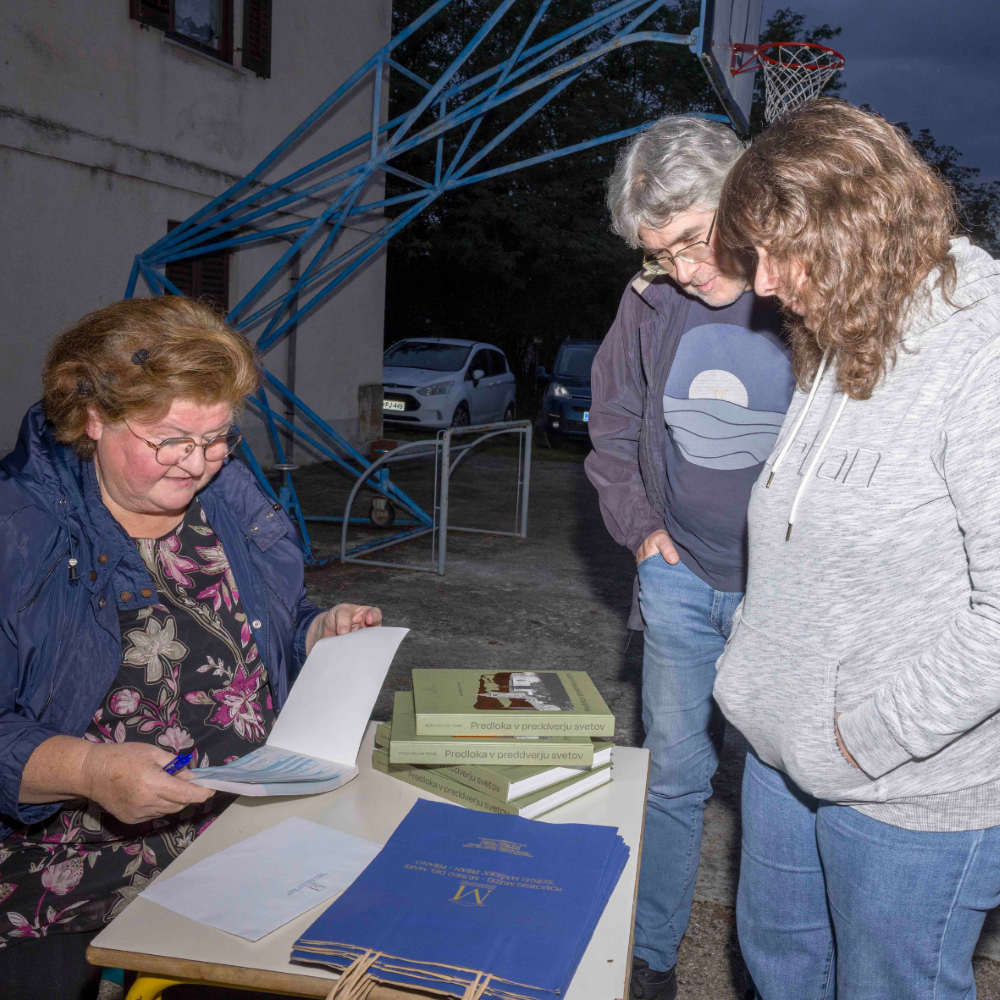
Published in 2024, the book was written by archaeologist Elica Boltin Tome, former director of the Sergej Mašera Maritime Museum in Piran. The presentation, organised at the invitation of Bojan Tavčar, a member of the village committee, formed part of the celebrations marking the 40th anniversary of Predloka's official establishment as a settlement by municipal decree.
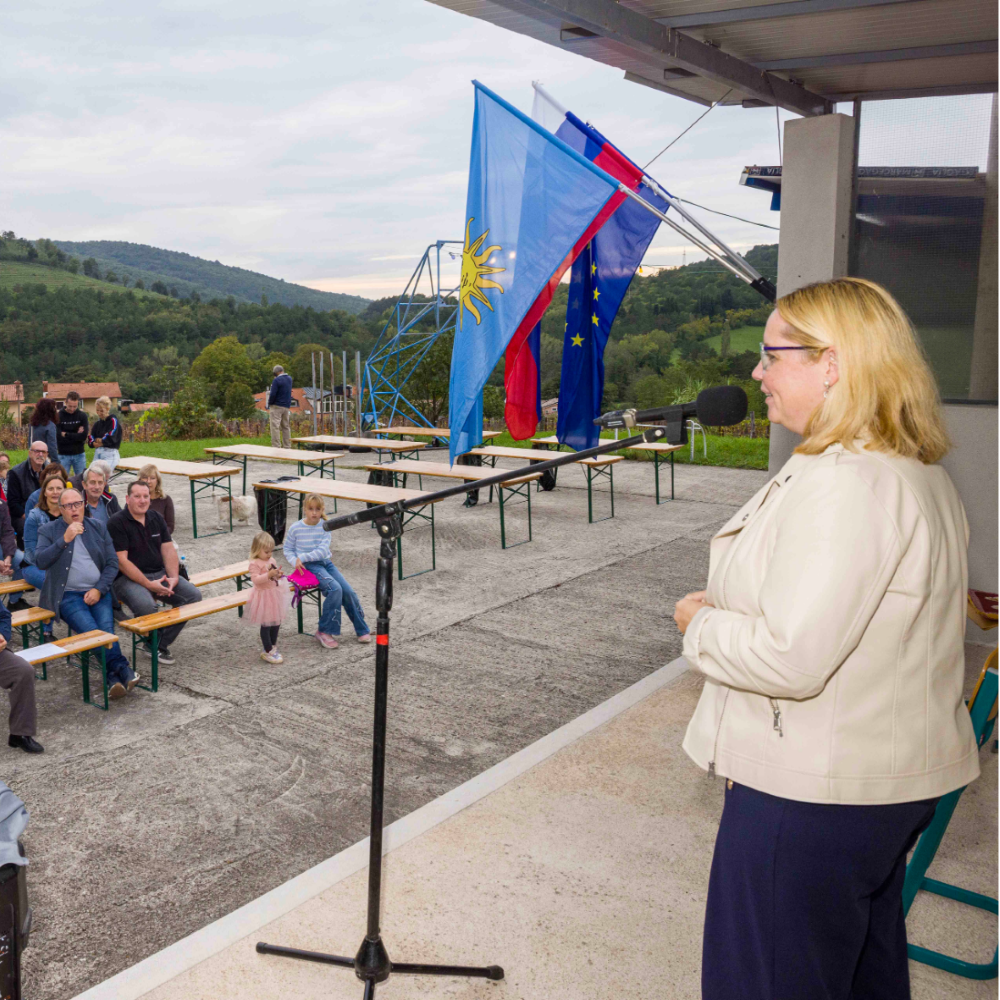
The villagers were welcomed by parish priest Milan Stepan, former Deputy Mayor of the Municipality of Koper Mateja Hrvatin Kozlovič, and Pavel Frank, President of the Črni Kal Local Community.
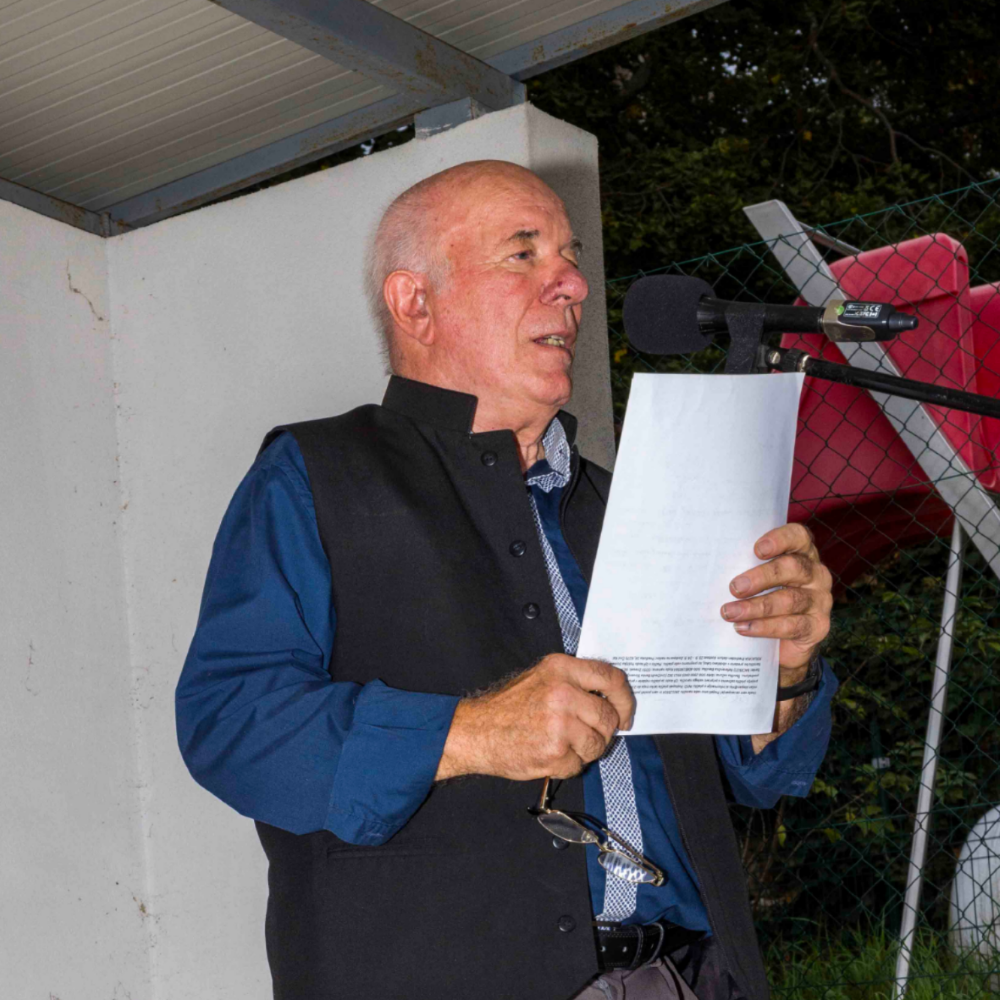
The villagers listened with great interest to the book presentation and the accompanying cultural programme. Dr. Nadja Terčon spoke about the significance of its publication, which was released to mark the 70th anniversary of the Maritime Museum in Piran. She emphasised that its contents are valuable and interesting to both specialists and the general public.
She outlined the contents of the book, which brings together the author's academic studies, research, fieldwork and analytical work, as well as her written and photographic documentation and the published findings of her extensive professional work.
Particular emphasis was placed on the discovery of early medieval Slavic graves dating from the 9th to the 12th century, one of the most important archaeological discoveries in Predloka and Slovenian Istria. As the first and oldest Slavic graves discovered in this part of Istria, they represent an exceptionally valuable archaeological source. Published in the book, they currently constitute the only archaeological source available for studying migration patterns in this part of Slovenian Istria.
The book presentation was followed by an enjoyable and engaging cultural programme and an opportunity to socialise with the villagers in a warm and friendly atmosphere.